
In June 2020, I decided to take part in The Wildlife Trusts ‘30 Days Wild’ challenge. The general idea was to appreciate nature – and the positive effect it has on wellbeing and mental health – through daily ‘acts of wildness’.
I started taking more of an interest in The Wildlife Trusts during my last ever pre-lockdown holiday in Norfolk. In an attempt to stay local while we were there, we looked online for some nearby beauty spots to explore and found the Norfolk Wildlife Trust website. My partner then very kindly gave me an annual subscription for my birthday and I was delighted to see that a similar challenge was running over 12 days from the 25th December. So here’s a summary of what I got up to.
Day 1: 25th December
We had a lovely wintery walk on Christmas Day morning and, after having a genuinely outrageous portion of Christmas dinner, we had another short stroll around the town. What I really enjoyed about this shorter walk was all of the blackbirds we heard squawking in the darkness. The RSPB book notes that blackbirds are ‘common’ and I think that’s an understatement – their website says that there are over 5 million breeding pairs in the UK!

Day 2: 26th December
Boxing Day wasn’t the best weather-wise so I ended up reading a good chunk of Alys Fowler’s Hidden Nature: A Voyage of Discovery about her adventures on the Birmingham Canal network. Aside from giving me romantic thoughts about walking the canals and investing in a kayak, I learnt quite a bit about eels in this chunk. Did you know that all of the eels in Britain were actually spawned in the Sargasso Sea (part of the Atlantic Ocean) and then they travelled to us? I didn’t know this. Not sure how they end up in canals though!

Day 3: 27th December
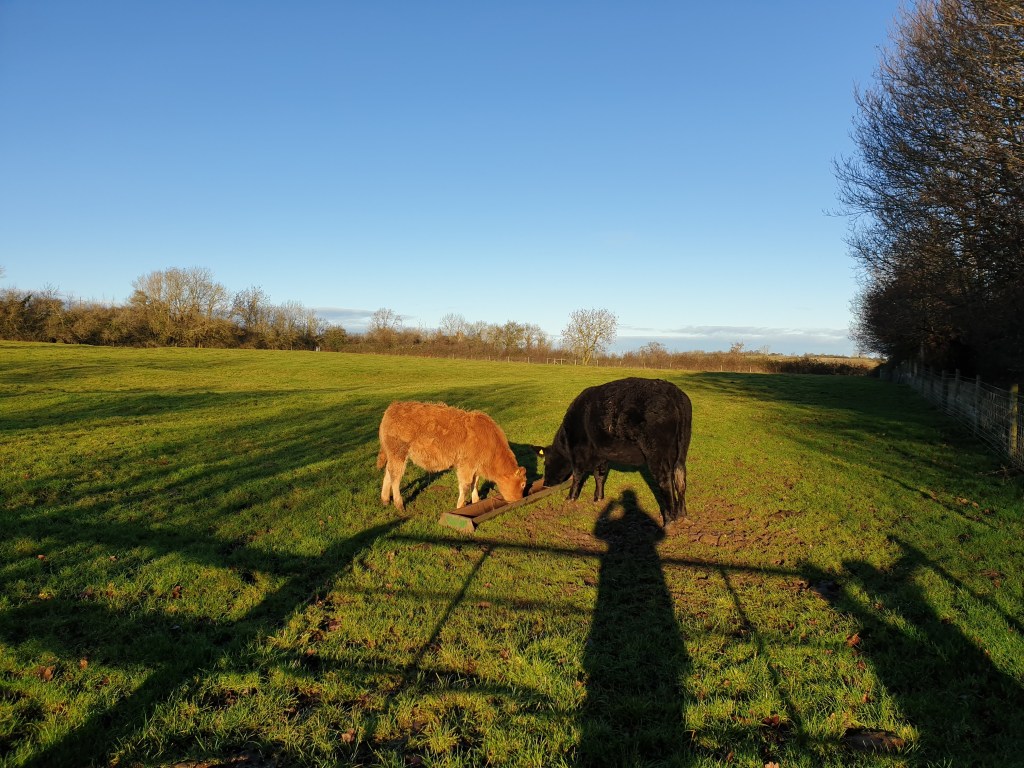
After some very heavy rain, we went for a road walk today. It’s just too wet and muddy to go through the fields at the moment, but we found a lovely road-route through some nearby villages (Barcheston, Willington, Burmington and Tidmington). The weather was cold and sunny – a perfect wintery morning – and the highlight was definitely seeing a beautiful cow and its calf in one of the fields (photo credit: Stefan Lang).


Day 4: 28th December
I finally finished a watercolour painting of a long tailed tit today. It was inspired by a trip to Warwickshire Wildlife Trust’s Ryton Woods just before Christmas. We had a very muddy walk here and there were lots of long tailed tits flitting between the trees – I’m sure they were laughing at us struggling through the bog!

Day 5: 29th December
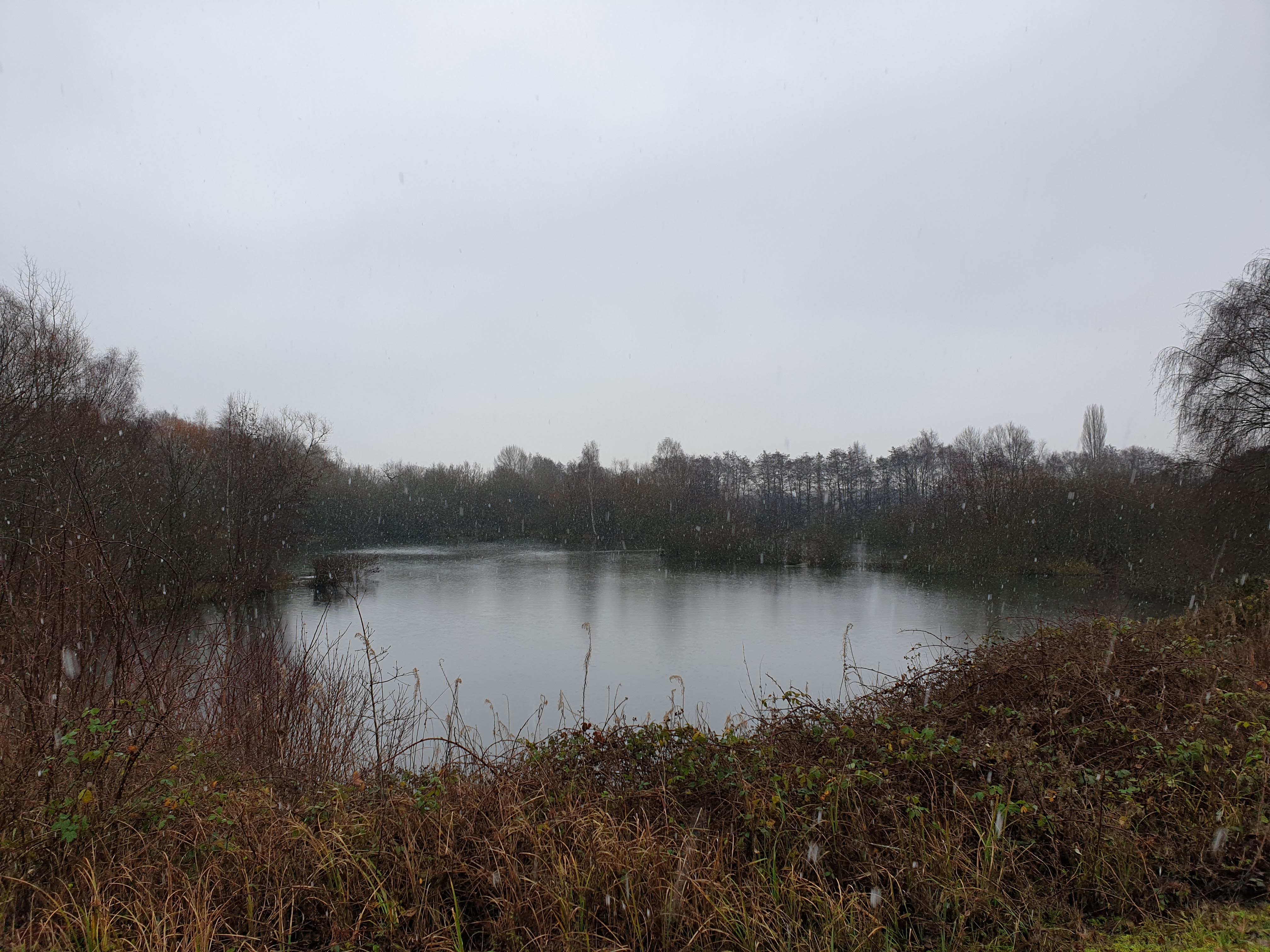
A visit to another Warwickshire Wildlife Trust reserve was the highlight of today. This time it was Brandon Marsh near Coventry. The pools at this reserve always offer up some interesting birdlife. This time the highlights were: a jay, tufted ducks, shelducks, cormorants, a heron, all manner of tits, countless robins and some magnificent swans that kept waddling and flying between the pools (photo credit: Stefan Lang).


Day 6: 30th December
A snippet from my BBC Wildlife Magazine was the ‘act of wildness’ for today. This issue has a very uplifting feature that highlights the conservation success stories of 2020. The first one is about the grey seal population at Blakeney National Nature Reserve which I was lucky enough to visit in early March 2020. Apparently, an estimated 4,000 pups were born there last year! If you’d like to see a free, slightly shorter list of conservation success stories, check out this post.

Day 7: 31st December
Today was another painting day. I usually procrastinate in the morning but I decided to get motivated and crack on with a new art piece. It was a goldcrest this time. I’ve written a longer post about this bird but, to give you the short version, it was inspired by a real life goldcrest that I saw on a local (and muddy!) walk in November.

Day 8: 1st January
I did something a little bit different today. We’ve been for lots of local short walks over Christmas but the weather was rubbish so I decided to look at some of the suggestions The Wildlife Trusts had sent over about ‘12 Days Wild’. I opted for a virtual tour of a Warwickshire nature reserve that I hadn’t visited before: Bubbenhall Wood and Meadow. Hearing that the reserve has 43 different species of birds, 19 different species of butterflies and lots of wildflowers (including bluebells!) has added it firmly to the list of places I’d like to visit in spring!

Day 9: 2nd January
It’s getting scarily close to ‘back to work’ time so we made the most of the dry weather and set off on a 10 mile walk from home. This time, we opted for a road walk from Shipston to Whatcote. The first bit was next to a national speed limit road so that wasn’t very fun, but the other 9 miles or so was on quieter single-track roads. We went through Honington first and then on to Whatcote and back. Highlights of the walk included seeing a buzzard, kestrel and a greater-spotted woodpecker (photo credit: Stefan Lang).


Day 10: 3rd January
It’s safe to say it’s been quite a food-heavy Christmas and I was craving a jog this morning. Once you get going, there’s something quite invigorating about going out for a jog in the cold and the dark. I misjudged the cold a few weeks ago and went out for a jog in what turned out to be freezing fog – I kid you not, I had ice crystals in my hair by the end of it! This time, it wasn’t actually as cold as I thought it might be. And, big bonus, I managed to beat the sleet that arrived shortly after I got back!

And, just as a side note, I also had a look at some suggestions from The Wildlife Trusts about how to reduce waste after Christmas. One idea that caught my eye was to cut up Christmas cards into pieces and use them as gift tags next year – I thought this was a fab idea!
Day 11: 4th January
It was another artwork day today and this time I focused on the fieldfare. At the start of winter last year, I was walking my usual route through the nearby meadow and noticed a group of birds making quite a racket. They sounded like parakeets but I knew that wasn’t possible! They also looked quite colourful but they kept flying off when I tried to get closer so I kept on walking and pondered what they could be. When I got home, I looked in the bird book and wondered whether they could be fieldfares. Having seen them quite a few times since, I can confirm that they definitely are!

Day 12: 5th January
The last day of ‘12 Days Wild’ and the first day back to work. To help break up the day, I had a listen to a BBCs podcast called 30 Animals That Made Us Smarter. I started listening to this back in the March lockdown but there were a couple of episodes that I missed. This one was about the blue morpho butterfly and how, despite its striking cobalt-blue colour, its wings don’t actually contain any blue pigment. Instead, the mosaic of scales that make up the inside of its wings are positioned in such a way that refracts the light so that our eyes see a blue colour. This butterfly has inspired new approaches to paint and textiles, partly in a bid to cut pollution from dye and paint production. Apparently a new range of car paint based on this approach has already been developed and it changes colour as the car moves!

Hope you’ve enjoyed reading my #12DaysWild diary. I would really recommend having a go at a ‘random act of wildness’ every day – it’s done wonders for my wellbeing!
Other Useful Links
The Wildlife Trusts (general info) – https://www.wildlifetrusts.org/
Local Wildlife Trust Tool – https://www.wildlifetrusts.org/find-wildlife-trust
Discover Wildlife (podcasts and articles) – https://www.discoverwildlife.com/
RSPB (bird and wildlife info) – https://www.rspb.org.uk/birds-and-wildlife/
 Ramblings of a (very!) amateur artist
2 thoughts on “#12DaysWild”