Ju-lyyy

Well that’s another month that flew by! I feel like I’ve said that too many times this year – I really need to try and find a slower pace again when I can!

There’s lots to talk about and reflect on. My 30th birthday brought an Irish mini break, for example, and the end of the month also brought a new volunteering opportunity. And, though I still noted a single act of wildness for every single day of the month, I think I realised over July that I have finally embedded ‘wildness’ into my daily habits. Small moments of nature and wildlife are a constant presence, on the good days and the bad.

It’s a little lengthy, but I hope you enjoy the read 😊

A particularly ‘wild’ day

And this is where I’m going to start. I had quite a wild July day when I returned home after my 30th birthday getaway. It started with a trip to RSPB Otmoor nature reserve with my partner. This is a lovely nature reserve (despite the horseflies!) in Oxfordshire. While we were there, we saw reed warblers, reed buntings, bullfinches, chaffinches, greylags and tufted ducks. We also heard a cetti’s warbler (remember ‘bring me lots of beer’?!) and a little egret. The most peculiar thing we saw, though, was a Canada goose/greylag cross – I had absolutely no idea that they could hybridise, but apparently it’s quite common!

Later, after we got home, I sat downstairs and admired the ragwort in the garden. The small yellow flowers reminded me of the extract that I had read about the Knepp Estate and ragwort in my Wild Isles anthology (edited by Patrick Barkham) – apparently some people just think it’s a horrible weed, but it’s such an important source of nectar for insects of all kinds. To stop me staring into space for too long, I decided to put some of my birthday presents out in the garden too: a solitary bee hotel and a wooden bird feeder.

Ragwort in the garden

Finally, I read a beautiful story that my partner wrote for me for my birthday. This counted towards my ‘wild’ day because it was about a siskin. Siskins are lovely little birds and the story was excellent!

Wildlife spots

Still a bit quiet on the bird-front this month. I’m hoping I’ll still see a kingfisher, little owl and peregrine this year (2022 hasn’t yet blessed me with these critters!) but I did get some unexpected views of guillemots while we were in Ireland, which was pretty cool!

Otherwise, I added a couple more insects to the list:

  • Black-tailed skimmer (dragonfly)
  • Essex skipper (butterfly)

My friend bought me a butterfly guide for my birthday so I’m hoping I’ll get better at identifying these pretty bugs.

Ireland-bound

I should probably say a bit more about my trip to Ireland. It came around so quickly in the end and the week leading up to the mini-break was stressful – my partner caught Covid-19 about 2 weeks before we were due to travel. Despite the odds, I somehow didn’t catch it and we were both able to go away, but I was so sure we were going to have to cancel.

So it’s fair to say I didn’t really believe we were going until we arrived at the airport hotel the night before our flight. I knew we were having 2 days in Dublin and 2 days in Cork, but the plan was very flexible. I’m so glad it was because we ended up with some big wildlife highlights. I can’t list them all so here are my top 3:

1. All of the herons that call the River Lee home. We walked past so many of them (photo credit: Stefan Lang)
2. A goldcrest hopping about on the branches of a pine tree in Cork near our guesthouse. It didn’t make a sound, but it gave us a good view.
3. My birthday trip to Howth, up the coast from Dublin. We could see gannets in the distance and spotted(/heard!) guillemots and kittiwakes on the cliffs.

The neighbourhood martins

House martins have a bit of a story before and after my Irish trip. In fact, they really feature across the entire month. Some context: I absolutely love house martins and we’re lucky enough to live in an apparently highly desirable area for these black and white birds.

But I also have a bit of a mixed history with them. Once, for example, I opened our bedroom window after they had left on their voyage to warmer climes and a dead house martin was jammed between the window and the frame. To this day, I still have no idea how that happened. So there’s a bit of emotional ‘baggage’.

A juvenile house martin

And their July story started along these lines. I saw that one of my cats was about to pounce on something in the garden. When I went out, I found a (thankfully uninjured) juvenile house martin in the grass. I chased my cat away and picked the little thing up, wondering what on earth I was supposed to do with it. After a quick check online, I gave the nearest wildlife rescue a call (The Vale Wildlife Hospital) and promptly drove the house martin to the outskirts of Tewkesbury. I was delighted it had survived and wished it well as I dropped it off. So a happy ending in the end but it was, again, pretty emotional!

Then, towards the middle of the month, the neighbourhood house martins surprised me. This time in a good way. Basically, for about 2-3 days all of the neighbourhood house martins suddenly descended to the top of our cherry tree. They chilled on the top branches between about 6.30 and 7.30am and then dispersed as quickly as they came. This behaviour was over a particularly hot period so I wonder whether it had something to do with the moisture or maybe the leaves were shielding some tasty insects?

Wildlife hospital

And, as it turns out, the little house martin that I rescued at the start of the month led me to a wonderful opportunity. I found out after my visit to the Vale Wildlife Hospital that they were looking for volunteers. After applying, I was asked if I’d be willing to take the Sunday evening shift (6-10pm). Every part of my being thought that this would be a bad idea – I work full time so Monday morning would be nasty and I’m a worrier so I’d be anxious about my shift for the whole of the weekend. But I obviously said yes regardless. When was I going to get another opportunity like this?

And, so, 3 shifts down, I’m absolutely loving it. The work is smelly, hot and tiring and all of the points above about Mondays and anxiety came true, but I’ve had the opportunity to feed baby birds (including other house martins!), feed baby hedgehogs (it’s harder than it looks!) and help to feed foxes and badgers. The role will only last until September but I’m so glad I have given it a go. It really has been the highlight of the month!

One of my Sunday evening tasks! I’m not as good at it as this yet!

I hope you had a good July – here’s my full wild list

Week 26 (cont.)

Fri 1st July: Took a baby house martin to a wildlife hospital today. I never realised before that their eyelids are white when they close them. Hope the little thing is ok.
Sat 2nd July: Listened to the chaffinches at a place in the Cotswolds called Chalford Hill. There were so many of them!
Sun 3rd July: Saw a skimmer in Chalford Hill (black-tailed skimmer) and a skipper when I got home (Essex skipper).

Wildflowers in Stratford
Week 27

Mon 4th July: Enjoyed a beautiful dusk in my favourite patch. The song thrush was the highlight.
Tues 5th July: Pretty sure I saw a sparrowhawk this evening in the meadow. Its wings were very broad and some research suggested that it wasn’t a kestrel…
Weds 6th July:
Checked out the urban wildlife photography award winners. I really like the ground squirrel photo!
Thurs 7th July:
Spotted some sand martins on the Liffey in Dublin.
Fri 8th July:
Also spotted some guillemots at Howth up the coast from Dublin. We could see gannets in the distance too.
Sat 9th July:
A goldcrest gave us a good view in a park near to our guest house in Cork. Gotta love a goldcrest!
Sun 10th July:
Enjoyed the wildflower garden at Nano Nagle Place.

Week 28

Mon 11th July: Walked past sooo many herons on the River Lee in Cork.
Tues 12th July: Had a proper ‘wild’ day today! Otmoor, wildlife story and the garden!
Weds 13th July:
Started a new book today about Blakiston’s Fish Owls (Owls of the Eastern Ice by Jonathan C Slaght). The author writes about seeking them out in one of the most remote places in Russia.
Thurs 14th July:
There are more red kits around Shipston these days. I saw one today swooping around the estate – they’re a welcome sight.
Fri 15th July:
The neighbourhood house martins seem to be doing something peculiar at the moment – they really like the top of our cherry tree first thing in the morning. They all sit in the leaves at the very top between about 6.30 and 7.30am.
Sat 16th July:
Enjoyed a stroll through a Shropshire nature reserve with family. It was called Ifton Meadows.
Sun 17th July:
My first shift as a volunteer at the Vale Wildlife Hospital!

Week 29

Mon 18th July: Checked out the bee eater live cam and looked through some photos on Twitter. I can’t believe they’ve bred in Norfolk.
Tues 19th July:
Did something a little different – went to an amphitheatre for some outdoor theatre. While there, I got a good views of the wildflowers growing nearby.
Weds 20th July:
Morning walk – the wheat is so dry and yellow now. It must be due its harvest soon. While I was walking, I heard a yellowhammer. Haven’t heard one for a while.
Thurs 21st July:
Another morning walk (through the fields to Tidmington) – this time with the binoculars. Saw a heron perched at the top of a tree, a young kestrel and some greenfinches.
Fri 22nd July:
Started a new watercolour – this one is inspired by the wildflowers in Howth.
Sat 23rd July:
More wildflowers – in Stratford this time!
Sun 24th July:
Read all about the song thrush that my friend sponsored for me as a birthday present.

Week 30

Mon 25th July: Spotted a gatekeeper butterfly on a walk – I read up about it in my new butterfly book.
Tues 26th July:
Worked on my watercolour flowers and also started a house martin piece.
Weds 27th July:
Read all about the difference between white butterflies in an online article: green-veined white, female orange-tip, large white and small white.
Thurs 28th July:
Walk to Honington. I saw two roe deer chasing each other in circles (part of their courtship) and a hare in a field.
Fri 29th July:
Walk around Shipston – decided to look out for bees. I think I saw a red-tailed bumblebee, buff-tailed bumblebee and a common carder bee. I also think I saw a common dronefly and a orange-spined dronefly.
Sat 30th July:
Read more of my book on fish owls today. Check out what they sound like online – it’s amazing!
Sun 31st July:
A massive moth flew in through the window after I got home from my wildlife hospital shift. I looked it up and it was a Willow Beauty.

Wildflowers in Howth

June 2022: A wild 30 days

June is always a special month. It was during June back in 2020 that I was introduced to something The Wildlife Trusts do every year: 30 Days Wild. It’s a wild challenge. A challenge that involves doing a ‘random act of wildness’ every single day. After I completed this challenge two years ago, I decided that 2021 would be a year of 365 days of wildness and, so, I’ve kept up the habit every single day since.

My June round-up is therefore extra special because I completed this challenge for the third time. And I really needed these wild moments this month. It was another 30 days that just flew by, but my wild encounters brought me joy, peace and focus. Hope you enjoy the read! 😊

Artspiration

I don’t usually start with this, but let’s delve straight into some art. A few of my June pieces were for pleasure and others were gifts. My wild adventures featured, along with those of others. I can only really do them justice by giving a brief explanation of each one.

Let’s kick off with a gift for my mum. I painted this watercolour for her after she shared some photos of the ‘rainbow sheep’ with me. She’d enjoyed a few walks over winter with a friend and had loved seeing the multi-coloured sheep. I absolutely loved painting the shades on the white wool, along with the very bright markings!

On a very rainy day in the middle of the month, I had a go at something a little different. I’ve had lots of wild encounters with pied wagtails but my favourite moment was in Liverpool last year over Halloween. I love these black and white birds and drawing one in ink seemed like the best way to show off it’s ‘pied’ qualities.

And, finally, a very bright and colourful watercolour. This was inspired by birds foot trefoil and knapweed from a local walk. I spotted these beautiful flowers, and their wonderful colours, after a very busy day behind the desk. It was a welcome sight and I knew straight away that I wanted to replicate the colours in my art.

Wildlife spots

Meadow brown
Oak eggar caterpillar

I only added a little egret to the bird list this month. I can’t believe how many avian beings I’ve seen this year so far and it had to peter out a little eventually.

So instead of birds, I’d like to give a shout-out to the other animals that I saw this month:

  • Painted lady
  • Red admiral
  • Meadow brown
  • Comma
  • Ringlet
  • Marbled white
  • Oak eggar caterpillar
  • Hummingbird hawkmoth
  • Early bumblebee
  • Buff-tailed bumblebee
  • Southern hawker
  • Banded demoiselle
  • Pipistrelle – probably common pipistrelle

The butterflies, bees and dragonflies were definitely on-trend as ‘Insect Week’ fell in June too!

Detective work

Many of my wildlife spots required some detective work. Insects, in particular, can be very difficult to identify. I feel I’ve got the hang of birds – I recognise many songs now and they are large enough to be viewed well from a distance. Some butterflies are also familiar. But insects in general are much more difficult, as are bats. So I’ll focus on a couple of these.

Female southern hawker

First, the southern hawker. I saw this dragonfly on a bit of scrub near Shipston. I realised it was an impressive beast straight away and I used an app (Picture Insect) to help identify it. I’m always a bit sceptical of these apps so I tend to use them in order to narrow down the list. The app suggested it could be a hawker so I took to the internet to get a bit more specific. The British Dragonfly Society was extremely helpful – photos on the webpage confirmed that I’d seen a female southern hawker.

And the common pipistrelle. Well, this was a toughie. Wandering blindly near the Travelodge in Hayes (see ‘Urban Paradise’ below), we saw bats flying around as the last of the light disappeared one evening. Again, the internet came to the rescue. This time from the Bat Conservation Trust. I had absolutely no idea that there are 18 species of bat in the UK and many of these are impossible to identify without a bat detector. However, by a process of elimination, the bats we had seen were most likely to be common pipistrelles (if you’d like to find out more, check out this factsheet)!

Buzz buzz buzz

It’s fair to say that I didn’t shy away from a bit of learning this month. And I am absolutely fascinated by a book I started. It’s called Buzz by Thor Hanson and, as the title suggests, it’s a book about bees. I honestly can’t express how much I’ve learnt and I’m shocked at how much I didn’t actually know. For example, I never realised that bees evolved from wasps and that the really crucial difference between them is that wasps are carnivores and bees are herbivores. And can you believe that bees first evolved from wasps back when the dinosaurs still roamed the earth?! 

AND there are over 30,000 different species of wasp and 20,000 species of bee. The variety of bees is just astonishing: 7 different families, some social, some solitary. So many of them are ‘cuckoo’ as well – they use the nests of other bees and leave these bees to take care of their young. It’s honestly amazing.

Urban haven

And finally, one of my favourite highlights of the month. When you live in the countryside, it’s easy to forget that wildlife can still flourish in more urban settings.

In fact, I was lucky enough to spot a variety of wild creatures in an urban paradise on the outskirts of London towards the end of the month. In the middle of a business park in Hayes – near a very modern Travelodge – there’s a wildlife haven that leads to the Grand Union Canal. On this stretch, I saw a heron, green woodpecker, common tern, ringlets, commas, meadow browns, canada geese, coots, moorhens, a whitethroat and countless wildflowers. It was a beautiful place to walk.

I hope you had a good June – here’s my full wild list

Week 22 (cont.)

Weds 1st June: I was stopped in my tracks this morning on my way to my favourite place by some beautiful roses climbing up a wall.
Thurs 2nd June: Enjoyed the sights of the Leeds-Liverpool canal near my hometown. And, in particular, seeing the old railway bridge where my grandma’s dog used to pull me up to the top on the lead.
Fri 3rd June: Spotted some mandarin duck ducklings on the canal!
Sat 4th June: Bought a barn owl card from a local artist – I’ve seen the local barn owl so many times!
Sun 5th June:
Delved into the online world to work out what kind of bee I’d seen on a flower in the garden – I think it was an early bee.

Week 23

Mon 6th June: Had a post-work walk around Shipston with a friend 🙂
Tues 7th June: Learnt a lot more about bees in ‘Buzz’ today by Thor Hanson. They evolved from wasps don’t ya know!
Weds 8th June: Took a moment to watch the swans and cygnets at work on a pond.
Thurs 9th June: Tested my tree knowledge on walk to Honington: lime, sycamore, elder, oak, weeping willow, ash, field maple.
Fri 10th June: Indulged in some birdsong on a morning walk – the whitethroat stole the show!
Sat 11th June: Read a BBC Wildlife Magazine article about Britain’s temperate rainforests. It reminded me of a wood I visited in Wales a while ago – Cwm Mynach.

Sun 12th June: Spotted a caterpillar near some scrubland on the outskirts of Shipston. My research suggested it was an oak eggar moth caterpillar.

Week 24

Mon 13th June: Sat in the garden and did some mindfulness this afternoon.
Tues 14th June: Read an extract of Gilbert White’s observations of swifts in Patrick Barkham’s ‘The Wild Isles’.
Weds 15th June: Treated the pot plants to an evening drink. Boy did they need it!
Thurs 16th June: Spent some time on my slow-moving pencil drawing of a snail. Working on this really helps me to slow down.
Fri 17th June: Enjoyed watching the local house martins fluttering and chortling around. We’re so lucky to have them in our neighbourhood.
Sat 18th June: Channeled some wildlife inspiration and worked on a pied wagtail ink drawing today while the air temperature plummeted by 10C!

Sun 19th June: Enjoyed a trip to Brandon Marsh this morning (common terns and chicks, reed warblers) and ended the day with ‘Honington Open Gardens’ where I saw a hummingbird hawkmoth!

Week 25

Mon 20th June: Went butterfly-spotting to kick off National Insect Week. I saw: a painted lady, small coppers, common blues and meadow browns.
Tues 21st June: Witnessed a kestrel chasing away a buzzard from a tree near the Stour. I wonder if the kestrel has a nest somewhere…
Weds 22nd June: Enjoyed watching a montage of the Leamington peregrines. Unfortunately, the male didn’t make it but the three females fledged successfully.
Thurs 23rd June: Practiced some more mindfulness in the meadow – the smell of the wheat really stood out.
Fri 24th June: Explored some urban wildlife near Hayes. Lots of wild flowers, heron, ringlet, comma, swift, moorhen, coot, swan, song thrush.
Sat 25th June: Enjoyed some wildlife-inspired art at the London Museum today. One pot with a bird on it apparently dated back to the 1200s! 
Sun 26th June: Some more urban wildlife at Regent’s Park – the meadow brown was the key player here!

Week 26

Mon 27th June: Spotted a beautiful dragonfly on a short walk around Shipston – according to the British Dragonfly Society, it’s a female southern hawker.
Tues 28th June: More wildflowers today. I even managed to identify them correctly from memory – knapweed and birds foot trefoil.
Weds 29th June: A walk around the meadow brought a linnet this morning! The sun was shining on him and his bright rosy head and breast beamed.
Thurs 30th June: I ended 30 days wild with a bit of watercolour – inspired by the knapweed and birds foot trefoil. What a month!

May May May..!

“…May May May! May May booty! May May booty!”

I have absolutely no explanation for the title and tagline this time. The headline is usually whatever pops into my head as I write or plan a post. So this is what it dished out this time!

So, I’m a little late writing this and, as we’re all being catapulted towards summer now, it sometimes feels a bit hard to keep up. It’s the first time in three years that we’ve been able to go out at this time of year and do things unrestricted so the cats have been in the cattery a bit more than normal (sorry cats!) and I’ve been off gallivanting!

But it’s still important to take time to reflect so here’s my May post. The month brought a wonderful holiday with loads of wildlife, some walks in the sunshine – although sunny days really have been few and far between! – and a lot of growth in the garden. Hope you enjoy! 😊

Island wonders

The main highlight of the month was my trip to the Isle of Mull. I’ve written about this in more detail separately, but, to summarise, it brought the isolation and wild landscape that I needed. A week of no TV, wifi or mobile signal inside the cottage provided the perfect opportunity to walk, read and write.

I even kept a journal during the week. This is something I always have the ambition to do while I’m away but never quite manage to keep it up. I have countless unfinished journals on my bookshelf and half-written notes on my phone. But, this time, I had a complete overview (mainly written on a picnic table outside the cottage next to a cider on the sunny evenings we were occasionally blessed with).

And I learnt a lesson while I was there. As our boat trip to the Treshnish Islands was cancelled, we lost an opportunity to see some new seabirds (puffins, razorbills, manx shearwaters, etc) and some of the ocean’s wonders. Though I was disappointed about this, I reflected on it in my journal and had a bit of an epiphany:

“There’s no point in just seeing birds to tick them off a list – it’s also about the quality of the interaction and the appreciation of what you’ve seen that counts. For me, so far, it’s the gannets feeding when we were on the ferry, the cuckoo in the scrub, the snipe flying around and the encounters with the mistle thrush that stand out.

Wildlife spots

Eider Duck – Collins Life-Size Birds (2016)

Now I promise I’m not going to totally contradict myself! There were a lot of new bird encounters this month, and this is a list of them, but there was more to each interaction than a tick in a box.

Many of the wildlife spots were from Mull but the swifts returned much closer to home and Brandon Marsh Nature Reserve revealed a cuckoo in the flesh for the first time – I’ve only ever heard them before!

  • Black guillemot (Oban & Mull)
  • Common sandpiper
  • Corncrake (heard on Iona)
  • Cuckoo – finally saw one!
  • Dipper (Mull)
  • Eider duck (Mull)
  • Gannet (Mull)
  • Great northern diver (Iona)
  • Golden eagle (Mull)
  • Goosander (Mull)
  • Great black backed gull (Mull)
  • Hen harrier (Mull)
  • Hooded crow (Oban & Mull)
  • Raven (Mull)
  • Reed warbler
  • Ringed plover (Mull)
  • Rock pipit (Mull)
  • Sand martin (Iona)
  • Sedge warbler
  • Shag (Mull)
  • Swift
  • Turnstone (Oban)
  • Twite (Mull)
  • Whimbrel (Mull)
  • Whinchat (Mull)
  • White tailed eagle (Mull)
  • Wood warbler (Scotland)

Red deer, a hedgehog and seals also featured on Mull and a red squirrel appeared at a bird feeder near Crianlarich on our way back home. That was a really unexpected treat!

There’s a hare!

Way before my holiday, I had a much more local encounter with a brown hare. I was off on a walk from Moreton-in-Marsh to Sezincote. For anyone familiar with the area, you’ll know that Moreton’s nearby arboretum is a real honeypot for locals and tourists alike and my walk started with the crowds. I wondered for a while why on earth I was being followed by tens of people on my trek out of the town. And then it hit me – Batsford Arboretum.

Lo and behold, once I turned off the well-trodden path to the arboretum, I lost the crowds. In fact I hardly encountered anyone at all for the majority of the walk. On such a sunny day, I took my time, had a little picnic and enjoyed the 7-mile wander.

Towards the very end, I spotted something in a field. I’d just gone a bit wrong on the trail and was a teeny bit lost. This was about 5.5 miles into the walk so I was flagging a little bit but I stopped and had a look at what it was. The first thing I noticed were two very large brown ears. It was a hare!

No Mow May

Did anyone else do No Mow May? I am absolutely astonished by the growth in the garden. I’m guessing it’s because of the countless muggy days, occasional sunny spells and unexpected downpours!

Before setting off to Mull in mid-May, the grass had grown to a height I’d seen before – pretty tall but mowable if I had to. The wild onion’s white flowers were blooming and there was a scattering of dandelions across the lawn. It looked very pretty.

When we returned, the garden was a wildlife paradise. The grass was so tall and all sorts of plants had grown through: Spanish bluebells, geraniums, early dog violet. I found myself apologising to my partner, neighbours, family. Had I let them all down?! But then it occurred to me – no, I hadn’t let them down. It’s a garden after all and since taking part in No Mow May, I’ve seen more bees, butterflies and birds!

Barn owl beauty

And, finally, I have to tell you about our local barn owl. Full of holiday blues, I headed to my favourite place in Shipston one morning towards the end of the month. It’s just the local ‘meadow’ (more a “field of wheat”, really) and it was before work. I wasn’t really looking forward to the day ahead so I knew the walk would help.

BBC Wildlife Magazine (June, 2022)

I passed a couple of people on the track walking their dogs, but I was a little distracted by something in the distance behind them – a white shape floating around on large wings in the field beyond. A barn owl? Or was it a little egret? I didn’t see it very well until I got to its field – it was the former!

I watched it as it swept low over the ground, high above the fence posts and then hovered up and down over a potential catch. I’ve never had such a view before. And I didn’t just see it once, I saw it again at a similar time 3 days later and then saw it in the evening. From my bird book, I’d bet that it has a nest with some hungry chicks nearby – it explains the almost-daytime hunting!

This is from early June – the barn owl is still hunting!

I hope you had a good May – here’s my full wild list

Week 17 (cont.)

Sun 1st May: I kept an eye on the new peregrine chicks at Leamington today – I still can’t believe they all hatched within 24 hours!

Week 18

Mon 2nd May: Finally saw a cuckoo today – at Brandon Marsh!
Tues 3rd May: Enjoyed seeing lots of flowers on an evening walk – apple tree blossom, bugloss, dandelions, hawthorn blossom, forget me nots, orange poppy.
Weds 4th May: Tested my knowledge about trees and was pleased to see I’d correctly identified a horse chestnut in flower.
Thurs 5th May: Morning walk through the fields – the cool black sheep had lambs!
Fri 6th May: Learnt a lot about honey buzzards in ‘British Birds’ – their display ‘wing claps’ are really interesting and they’re also very secretive.
Sat 7th May: Moreton-Bourton on the Hill-Sezincote walk. Saw/heard: goldcrests, wrens, red kites, robins, blackbirds, wrens, chaffinches, blue tits, buzzard, whitethroat, goldfinches, kestrel, muntjac, hare, pied wagtail, swallow, jay.
Sun 8th May: Enjoyed watching the lawn grow as part of “no mow May”. I wonder how long it’ll get…

Week 19

Mon 9th May: You can tell Spring is well and truly here now – I was woken up by a blackbird at 4am!
Tues 10th May: Read about the swamp wallaby in BBC Wildlife Magazine today. The female is constantly pregnant during her adult life. An incredibly evolutionary mechanism.
Weds 11th May: Looked through some wildlife photos taken recently on Mull. There was one of a golden eagle which was absolutely incredible!
Thurs 12th May: Spied on the Leamington peregrine chicks again – they’re getting very big now.
Fri 13th May: Travelled up to Oban and went for a walk. Saw two new birds: hooded crows and turnstones. The turnstones are very pretty. There was also a stonechat pair.
Sat 14th May: Crossed over to Mull on the ferry. Saw black guillemots off the coast before crossing and gannets during the journey. The gannets were diving into the sea for food.

Sun 15th May: Had a surprise encounter with a snipe at the cottage after a walk. It was a male and it was doing its display flight.

Week 20

Mon 16th May: A mistle thrush at Tobermory totally confused me. It hovered in the air and made some odd clicking noises before flying into a tree.
Tues 17th May: We were lucky enough to spot a male hen harrier flying near a small loch in the centre of Mull.
Weds 18th May: Saw two white tailed eagles while out and about. One flew over us at Calgary Bay and the other was being chased by gulls at the bottom of Dervaig. Their wings are just enormous.
Thurs 19th May: Headed to Iona and spotted some more new birds: sand martins, eider ducks and heard corncrakes too.
Fri 20th May: I was totally stunned by the green of Ulva (a small island to the west of Mull). There was also a wonderful community garden there.
Sat 21st May: Learnt another new bird call – this time it was the wood warbler. Warblers can look so similar but their calls can really help to distinguish them.

Sun 22nd May: Spied on a red squirrel that was chilling on a bird feeder at our guest house near Crianlarich on the way back from Mull.

Week 21

Mon 23rd May: I sat and admired the green and growth of the garden. No mow May has really turned the garden into a jungle. And I regret nothing!
Tues 24th May: Enjoyed a short pre-work walk through the meadow. Heard the whitethroat again.
Weds 25th May: Took some time to create some Mull-inspired birthday art. I focused on one of the granite crags.
Thurs 26th May: Another morning walk brought two bullfinches on the outskirts of Shipston and I noticed how much everything nearby has grown.
Fri 27th May: Spotted a barn owl near the fields by the meadow. It looked like it was hunting. Maybe it has a nest nearby with some hungry chicks?
Sat 28th May: There were lots of blue butterflies on a walk to Tidmington. They’re definitely enjoying the sunshine (when it’s out…)
Sun 29th May: Had a look through the recent sightings at Brandon Marsh. Hobbies have been spotted!

Week 22

Mon 30th May: Saw the barn owl again. I had a look in my Collins Life-Size Birds book and, as it’s hunting in the day, it’s definitely likely that it has young.
Tues 31st May: I cannot believe how big the peregrines are now! They have grey feathers!

Another photo from the Moreton walk

“LarryBird’sMullet”

I’m not even sure where to start. The wonderful sights and sounds. The sea air. The wind (oh my gosh the wind!) and the rain. The birds and beasts. The wonder of this Scottish island.

Perhaps I should start with a title explanation, for I’m talking about the beautiful Isle of Mull which I was very lucky to visit in mid-May 2022. In the days (maybe weeks?) before the trip, I had a daily Twitter obsession – searching for photos of the wildlife we might see on the island. My search phrase was “mull birds” and, guess what, one of the top Twitter search results was an account called “LarryBird’sMullet” 😂

So I got used to ignoring this spoof account based on a basketball player’s hairstyle, though it will always have a special place in my heart and it will always remind me of this holiday. Instead, I stared in wonder at the wildlife photographers’ recent sights. The images were incredible: white-tailed eagles, golden eagles, otters, short-eared owls, divers, puffins. I was so excited!

So this is a brief insight into my wild experiences on the island. It may not seem so brief, but, trust me, I could’ve written more!

A bitta context

Let’s take it from the top: Mull is located in the inner hebrides. It’s parallel with Dundee and is north of the Isle of Arran, Islay and Jura. It’s south of Rum and Skye and covers about 340 square miles. According to 2020 estimates, it has a population of 3,000 people; travel is mainly via a small network of single-track roads with passing places (they were fun!) The landscape is a mixture of white sand bays, granite crags, sea lochs, mountains and machair.

Spring days are long on Mull. The sun rose at 4.50am and set at 9.50pm!

I finished a book about the Scottish islands while I was away and something from it really stuck with me. The book is called Love of Country: A Hebridean Journey by Madeleine Bunting. In her last chapter, she writes about St Kilda in the outer hebrides and quotes a Greek poet called Constantine Cavafy:

Ithaka gave you the marvellous journey.
Without her you would not have set out.
She has nothing left to give you now.

(Love of Country, p. 284)

The context of this quote in the book is the cancellation of Bunting’s second scheduled trip to the island and, though I might’ve totally taken this out of context, these three lines really resonated with me while on Mull. The island dealt us some unexpected treats and, with the same hand, cancelled our boat trip to see all of the seabirds on the Treshnish Islands due to the wind and swell. A cheeky temptress!

View out to the Treshnish Islands

Background noise

Some of those unexpected treats included all of the ‘background noise’. The things that I immediately got totally used to: not hearing traffic, the sound of the swallows nesting in the cottage roof, the long hours of daylight.

We saw bluebells in all sorts of places

I realised about halfway through the holiday that I’d started to take for granted all of the bluebells that flourished wherever we walked – I had thought bluebells really only prospered in woodland, but here they all were, embedded within the ferns on the craggy landscape.

The wheatears as well; they were everywhere. The males looked particularly smart in their summer gear. All grey heads and black eye stripes. There was an abundance of other birds on our walks and around the cottage too, including: meadow pipits, wrens (again, everywhere!), goldfinches, hooded crows, wood warblers and stonechats.

Vummmm

^My written impression of a bird near the cottage… Needs improvement!

I’m not going to bore you with all of the more ‘special’ wildlife encounters so I’ll focus on a couple, including this one. After an evening walk to a local crag (Treshnish Point), my partner and I heard a sort of ‘humming’ noise. I had initially dismissed it as ‘just one of those noises’ but realised quite quickly that this remote point in the north west of Mull probably didn’t have as many of ‘those types’ of noises as mainland Britain!

My instinct was to just look up at the sky and, to my surprise, I saw a small bird with a long beak flying up into the air. It then stopped and did what I can only describe as a ‘vibration’ back down. It was certainly the cause of this humming noise.

I was honestly flabbergasted. I searched through the internal catalogue and my brain spat absolutely nothing back out. I found just enough phone signal to send the video to my family to see if they had any thoughts. Then, my partner asked if it could be a snipe – turns out it was! And it wasn’t just a snipe. It was a male snipe vibrating his tail feathers in a flying display!

Big birds

Mull is known to be one of the best places to see our biggest birds of prey: golden eagles and white-tailed eagles. The varying heights of the complex landscape can sometimes mess with your mind: is that giant bird circling over that mountain/hill/crag actually a buzzard?

Treshnish Point

Sometimes, it’s only when you realise what other creatures they’re next to that you understand their actual scale. We were lucky enough to see both of these eagles from a distance. On one occasion, a golden eagle was chasing a kestrel over Treshnish Point. We saw it dive from height (impressive in itself) and swoop towards the smaller bird of prey. Kestrels have a wingspan of only 65-80cm, buzzards 115-130cm and golden eagles 190-225cm! We saw this same golden eagle (presumably it’s the same one?) from our cottage almost every evening.

But did you know that they’re not actually our largest bird of prey? This award goes instead to the white-tailed eagle with an enormous wingspan of 190-240cm. We saw the huge wings of one of these beasts near the white sands and turquoise sea of Calgary Bay. It flew over us with it’s huge, broad wings as it rode the wind. Its scale was also clear when we spotted some greater black-backed gulls (150-165cm wingspan) chasing another white-tailed eagle at Loch a’ Chumhainn near Dervaig. You didn’t even need to see the binoculars for that one!

Corncrake actuelle

So I’d be lying to you if I said I’d seen a corncrake, but we were lucky enough to hear some when we went on a daytrip to Iona. Iona is known best for its abbey – the final resting place of St Columba. It’s a key destination for pilgrims and it was by far the busiest place we visited.

Iona abbey and its turquoise sea

It’s also known for its efforts to protect and support corncrakes. The corncrake is a largely nocturnal that likes to hide. Corncrakes are also only with us from mid-April to August/September, spending the winter months in Mozambique.

Corncrake – Collins Life-Size Birds (2016)

It isn’t impossible to see a corncrake, but when I say they like to hide I mean they like to hide. They stay undercover in the island’s reedbeds and grasses and only the very lucky visitor will see one hop out into the open. That said, one thing that you are much more likely to encounter is the male corncrake’s call – and that’s exactly what we enjoyed. I was listening to an audio guide for the abbey when I suddenly heard the unmistakable croaking of a corncrake. It was so close and yet invisible to the naked eye.

Artspiration

I’d like to end with my other passion. Trips away always get the creative juices flowing and Mull didn’t disappoint in the slightest.

Crag below the cliffs at Haunn

In fact, the wildlife encounters I experienced have already started to inspire my art. I have some additions to the bird list I’d like to paint/draw/create: siskins, turnstones, stonechats, whinchats, whimbrels, eider ducks and no doubt many more that I’ve forgotten…

Ink on watercolour – inspired by the crag above!

The landscape as well – so many photos of hidden woodlands, white sandy bays, black granite crags and, of course, the sea that I’d like to etch onto paper. I’ve already started to do this, but it’s easy to let inspiration slip once you return to reality. That said, I’m confident these memories won’t disappear in a hurry.

If you’d like to find out more…

I’d highly recommend the following resources if you’d like to find out more about visiting the Isle of Mull, along with it’s wildlife and history (oh and the food too!)

April 2022: I was spun

“You spin me right ’round, baby, right ’round” – for some of you, you’ll hear the original version. For others, potentially like me, you may hear the Flo Rida feat. Ke$ha song that was presumably inspired by the original. Either way, I can confirm that I was spun in April 2022. What a month!

I feel like it all started reasonably gently. The odd walk here, a goldcrest there; wren here, a little flower painting there. But, from the middle of April onwards, the wild highlights were thick, fast, unexpected and excellent. Hope you enjoy the read 😊

An ibis of the glossy kind

I’m going to take a counter-intuitive approach and start at the very end of the month. 30th April 2022. The day that my friend and I got so much more than we deserved at my favourite ol’ nature reserve – Brandon Marsh.

We were having a wander and a natter around the pools. We went on a different route to my usual loop and only ended up in a hide about an hour into the visit (I usually go straight to the hides!) It was quiet inside and we had a lovely sunny view of the large pool. As we sat there, I saw two large black birds circling above the water. We both initially dismissed them as cormorants, but an awkward look through the binoculars suggested it was much more complicated than that – two long curved beaks…

A proper birder managed to get a good photo of the ibises! Aren’t they amazing?!

I started to wonder whether we’d possibly seen a proper rarity. Glossy ibises are rare but they often crop up in the Rare Bird Alert round-up (yes, I’m that geeky!) I didn’t dare utter my ponderings out loud. Instead, we legged it over to the other side of the pool when they finally decided to land. And lo and behold we were right – later confirmed by an ‘actual’ twitcher!

Wildlife spots

And it didn’t stop there. I added a lot of other birds and beasts to my list this month!

  • Avocet (WWT Martin Mere)
  • Bewick’s Swan (WWT Martin Mere)
  • Black Tailed Godwit (WWT Martin Mere)
  • Blackcap
  • Cetti’s Warbler (heard)
  • Common Tern
  • Cuckoo (heard)
  • Curlew
  • Garganey
  • Glossy Ibis(!)
  • House Martin
  • Lesser Black Backed Gull
  • Little Ringed Plover
  • Mandarin Duck
  • Marsh Harrier (WWT Martin Mere)
  • Red-Legged Partridge
  • Redshank (WWT Martin Mere)
  • Snipe
  • Sparrowhawk
  • Swallow
  • Willow Warbler
  • Whitethroat (RSPB Martin Mere)

I wrote about my trip to WWT Martin Mere over Easter weekend separately, but, as you can see, there was a cracking haul of birds there!

The butterfly count improved this month as well – I saw peacocks, orange tips, speckled woods, common blues, small whites and green-veined whites. Still no red admirals yet. The mammal highlight was an otter (more below!)

New arrivals and old friends

I started to spy on the Leamington peregrine falcons last month, but I knew that April would bring the action. 4 eggs laid at the top of Leamington Spa town hall once again. The owner of the Twitter feed suggested that the eggs would likely hatch from 23rd April onwards.

By 28th April, I was starting to get a little worried, but, as it turns out, all 4 chicks hatched within about 24 hours! The clip below is from the live-feed when the 3rd chick hatched.

I’m also looking forward to new arrivals from some old friends soon – the house martins finally came back! I saw a lone house martin circling the houses very early in April and wondered when they’d all land properly. Towards the end of the month, I finally heard their jumbled calls outside the spare room. I leapt out of my chair and ran to the window just as the house martin was about to enter the nest. It must’ve had a fright when it saw my giant head at the window!

A burst of spring

There was so much colour, blossom and sweet flowers to enjoy this month. Here are some of my favourites from my ventures – near and far.

An otter encounter

And I’ll finish on a final, wonderful story. On Wednesday 13th April, I decided I’d get up at 6am and have an early walk. And this decision changed my life.

I hadn’t been out and about that early for a long time, but I kept waking up with the light and thought I’d indulge in my urge to go out. I’m glad I did.

The sunrise was beautiful – I hadn’t seen a sunrise on a walk for while. To enjoy it to its full potential, I decided to reverse my route around the meadow so I could get a good view for as long as possible. And this was a stroke of luck because, as I walked around the bend of the river, past the disused pumping station near the back of the sewage works (of all places!), I heard a splash followed by something dark brown entering the water.

I thought it had to be a rat. What else could it be?! But I was wrong. To my absolute delight, it was an otter. I never thought Shipston’s diminutive River Stour would be able to support an otter, but there you go!

I hope you had a good April – here’s my full wild list

Week 13 (cont.)

Friday 1st April: Read a chapter of ‘Love of Country’ about Iona. It sounds like such an interesting place.
Saturday 2nd April: Saw a little goldcrest on a walk through the fields to Burmington.
Sunday 3rd April: Recorded my bird spots on e-bird during a walk to Honington. I saw a reed bunting near Honington Bridge!

Week 14

Mon 4th April: Started a wildlife jigsaw. I’ve done this one a couple of times now – might need to invest in a few more.
Tues 5th April: Watched a documentary about the River Yukon. The musk ox’s were amazing! Such impressive coats!
Weds 6th April: Checked out the Rare Bird Alert round-up – the white-tailed lapwing spotted in Lincolnshire was pretty cool.
Thurs 7th April: BBC Wildlife Magazine told me that a new species of frog has recently been discovered – the tapir frog.
Fri 8th April: Frosty walk through the fields. Lots of chiffchaffs as usual.
Sat 9th April: Channelled warm summer days while I painted a sunflower birthday card for Auntie Joan.
Sun 10th April: Saw snipe, garganey, blackcaps and a little ringed plover at Brandon Marsh.

Week 15

Mon 11th April: I saw my first house martin of the year flying around the houses. I wonder when they’ll settle!?
Tues 12th April: Walk to Honington and around/through the meadow. Heard/saw a red kite being chased by a rook from the rookery.
Weds 13th April: Saw an otter on the River Stour near the meadow/sewage works – incredible!
Thurs 14th April: Planted some summer seeds in the garden. Let’s see if they grow…
Fri 15th April: Had an amazing day at Martin Mere. Finally identified a cetti’s warbler call and saw lots of other birds too – full story here!
Sat 16th April: Duck with 13 ducklings on the Leeds-Liverpool Canal. And a swallow on the wire
.
Sun 17th April: Sooo many nuthatches at Wycoller and saw a sparrowhawk being chased, along with a pair of mandarin ducks on the beck.

Week 16

Mon 18th April: I suddenly noticed lots of changes in the garden – the blossom has fallen off the cherry tree already! The tulips look good.
Tues 19th April: Enjoyed looking up all of the birds from the weekend in Collins Life-Size Birds.
Weds 20th April: Identified the blue flowers in the garden – they’re Spanish bluebells.
Thurs 21st April: Found out on social media that we missed out on seeing a tawny owl
at Martin Mere when we visited last Friday! Wish we could’ve seen it!
Fri 22nd April: Post-busy-day-at-work-walk to Tidmington through the fields. It was much needed.
Sat 23rd April: Walk with Aimée from the Swinford toll bridge to The Trout in Godstow and back. The orchard near the pub was beautiful.
Sun 24th April: RSPB Otmoor – saw lots of sedge warblers (they sound like robots!)

Week 17

Mon 25th April: The house martins are 100% back! I heard them tweeting outside the window while I worked!
Tues 26th April: Visited Lambs Pool near Sibford Ferris this evening. Saw a beautiful stag (roe deer) and cuckoo flowers.
Weds 27th April: Early morning walk before a very busy day at work.
Thurs 28th April: Another morning walk (a recovery walk!) – the roadside verges are bursting with greenery now!

Fri 29th April: Saw a blue butterfly, orange tips and whites on a local walk after work.
Sat 30th April: Glossy ibises at Brandon Marsh with Fish – we were so lucky!

“Bring me lots of beer, bring me lots of beer”

Last year, Lucy Lapwing introduced me to the world of birdsong and, more importantly, the techniques you can use to remember different tunes. Hence, blue tits became ‘tea lily lily lily’ and great tits ‘tea-cher tea-cher’. The difference between collared doves (coll-ared-dove, coll-ared-dove) and wood pigeons (wood-pige-on-PIGEON; wood-pige-on-PIGEON) apparent. Left to its own devices, this technique has now mutated into something that others, I believe, find rather disturbing: a bird that I’m adamant sings “bring me lots of beer, bring me lots of beer” as loud as it possibly can.

I first heard this bird at Brandon Marsh in Warwickshire earlier in April. I believed it to be a willow warbler – they’d only just arrived from their wintering grounds so it made sense that I wouldn’t have noticed the song sooner. I was so adamant this was the case that I sent my friend the willow warbler song, wondering what he’d make of it. It was only when I played it back in the WhatsApp message that I realised I was totally wrong. The song I’d heard sounded absolutely nothing like a willow warbler. So, that evening, I listened to every ‘feasible’ bird it could be. To utter failure.

You might be wondering where I’m going with this. What you’ll read below is actually about a little Easter trip up to visit my family. Just a long weekend and yet it was so much more than that. Because, as you’ll see, in addition to celebrating a 90th birthday, remembering grandad together and seeing family, I finally found out what on earth this bird with such an outrageous song is… And there were some other wild highlights too!

Party on the mere

The main reason my partner and I headed up to good ol’ Barnoldswick in Lancashire for the weekend was for my Auntie Joan’s 90th birthday. She passed this milestone on Friday 15th April 2022, but she had made clear that the festivities could wait until Saturday – she was firmly planting herself next to the landline for the day so she could receive all of her calls!

So, what better way to spend a sunny Good Friday than heading to a new nature reserve! WWT Martin Mere in Lancashire. And we had a real treat – some new bird spots for the year, including:

And this was the day that I identified that bloody bird (or, rather, my partner did). The culprit was the very elusive cetti’s warbler. A pretty little chestnut-brown bird with a very loud song. Admittedly, it often makes totally different noises when it sings but I’d argue, at times, you can hear “bring me lots of beer” very clearly!

The mighty Leeds-Liverpool

The stretch of the Leeds-Liverpool canal that runs through, and around, my family’s town (Barnoldswick, Lancashire) is quite a phenomenon. Over the years, I’ve seen all sorts of ‘exotic’ birds on this stretch of the canal: great crested grebes, kingfishers, mandarin ducks, to name a few.

It’s become a bit of a running joke now: what might we see this time?! So, before the whole family descended on a local pub for my Auntie Joan’s birthday meal, my partner and I had a short walk on the canal from a little place called Salterforth.

It was a lovely sunny Saturday and my ears first picked up the distant sound of a curlew. Curlews always bring a smile and I wish I could see more of them. There were plenty of blue tits, great tits and blackbirds too. Chiffchaffs and willow warblers occasionally made their presence known. There were lots of ducks as well of course. And one had 13 ducklings! Ducklings already!

13 ducklings!

But one bird stopped us in our tracks. It was on an overhead cable and was just chilling in the sunshine. We pondered what it could be – it wasn’t a finch of any kind, it was the wrong shape for a tit and just didn’t look like any of the ‘normal’ birds that hang out on wires. Obviously this called for some tools and the binoculars didn’t disappoint – the bird was in fact a swallow. Our first one of 2022!

Nuthatch central

Curlews also featured on our final day up North. We actually saw these ones this time after hearing them on the wind up on the moor near a place called Elslack. It’s so funny how they make that ‘bubbling’ sound as they fly. We also saw plenty of meadow pipits up on the heathland – this is the first time I’ve seen these birds properly.

Elslack Moor

As we descended down the single track road towards the hustle and bustle of Colne, we took a turn and headed over to a place where I used to work in my teen years – a tiny hamlet called Wycoller. Wycoller is an absolutely beautiful little place. Picture a stream with a very old wobbly-looking stone bridge, beautiful stone cottages and a ruined manor hall. Around the stream and brickwork, everything is green.

On the way down to the hamlet from the car park we saw two nuthatches – quite unusual I thought. They aren’t particularly common near where we live in the West Midlands. And that was just the start – we soon realised that the previously-unknown-birdsong than we kept hearing in the trees around the beck were nuthatch tunes! We must’ve seen/heard at least 6!

They even graced us with their presence when we sat on a bench by the ruins, tucking into a delicious lunch of pie and peas (followed by a HUGE slab of chocolate cake). That was the sort of grub I used to serve up as a waitress ‘back in’t day’, but I can honestly say that this was the first time I had noticed the nuthatches.

A nuthatch entertained us on this gate for a little while

Not a bad Easter weekend then! But there was one final ‘wild’ moment that I think I should note before I finish. After Wycoller, my family gathered to scatter grandad’s ashes. We chose an area of parkland. As we each took turns to say goodbye to him again, I mentally noted the birds I could hear in this section of the park: blue tits, chiffchaffs, great tits, robins, blackbirds and, right at the end, a goldcrest. I smiled to myself, knowing how much he would’ve enjoyed listening to them too.

Naughty March

I have three words for you: never. trust. March. Forget ‘mad March’, the third month of the year is just plain naughty. While the UK basked in sunshine in the middle of the month, was I the only one remembering what had happened in 2021? The poor cherry tree in the garden basked in the 20C March sunshine last year too before being covered in snow about a week later, its blossoms frozen in time. And all those poor butterflies – where do the brimstones and small tortoiseshells go when they emerge from their hibernation only to be plunged back into the dark and cold?

So I hope we’ll all agree that it’s a cheeky little month. The warmth brought signs of spring that we all enjoyed – I wouldn’t really have changed that – and the hour we lost is now bringing much-appreciated lighter evenings. But, as these cold evenings also remind us, you can’t trust it. Everrrrr.

This blew my mind

I’m going to dive straight on in. It might not surprise you to know that I’m such a geek these days that I’ve even signed up to the UK’s best birding magazine – British Birds. There were a couple of articles in this month’s issue that honestly baffled me. One was about a common redstart/whinchat hybrid that had been spotted in Shetland. The other was about a collared dove that decided to feed a wood pigeon chick. These cross-species interactions blew my mind, but redstarts apparently produce the most frequent ‘intrageneric passerine hybrids between clearly separated species’ (‘A presumed Common Redstart x Whinchat hybrid in Shetland’, British Birds Vol 115, March 2022). As for the collared dove, I ain’t sure about that one but how interesting!

Speaking of which, another animal caught my attention because of its behaviour around other species – a Scottish common dolphin that has learnt to copy the clicks of the harbour porpoises that she lives alongside. The article mentions that ‘adoptions’ in the dolphin/cetacean world aren’t unknown either. And, to come full circle, bottlenose dolphins have apparently hybridized with at least 10 species in captivity and the wild… Whaatttttt!

Wildlife spots

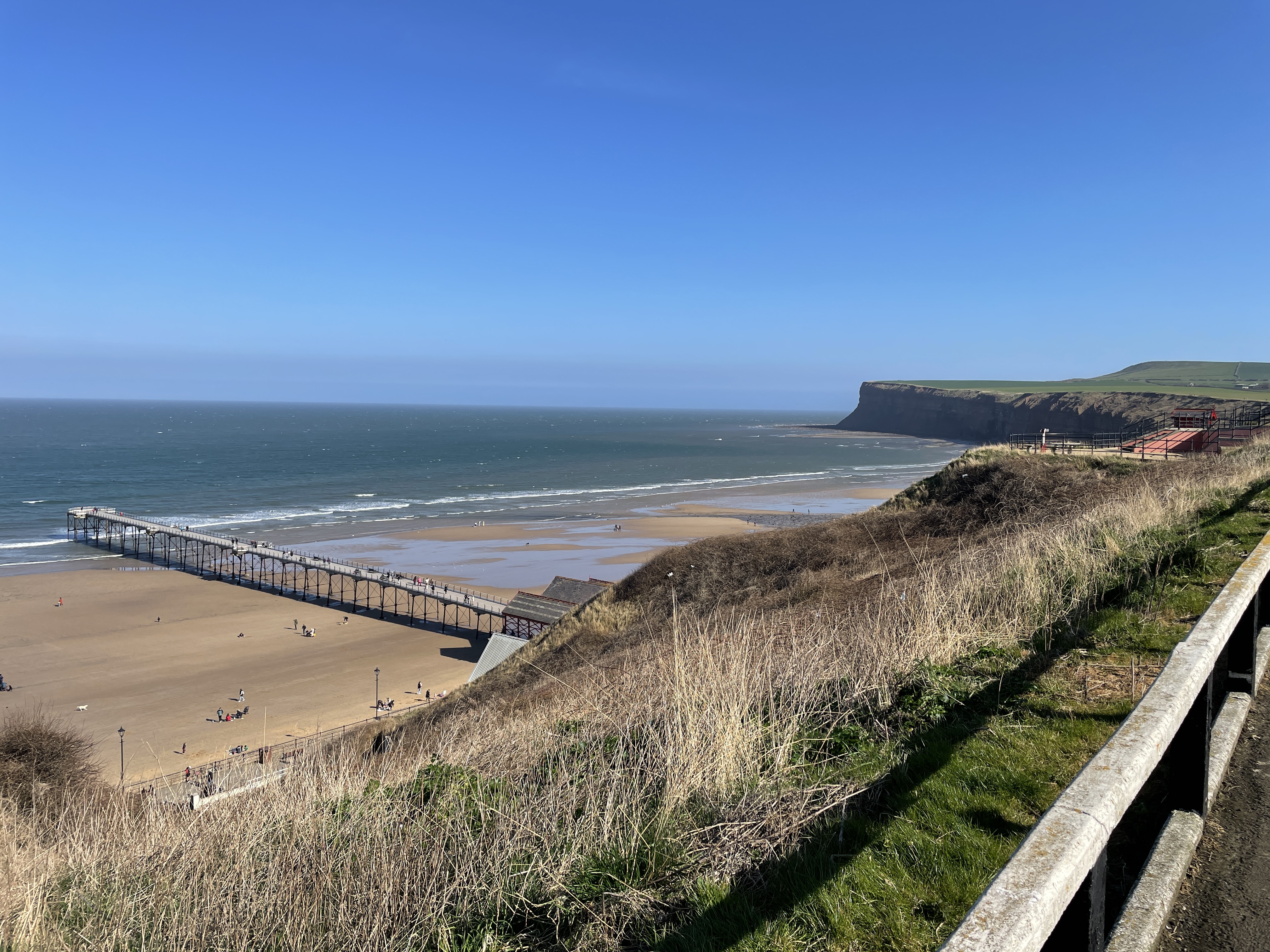
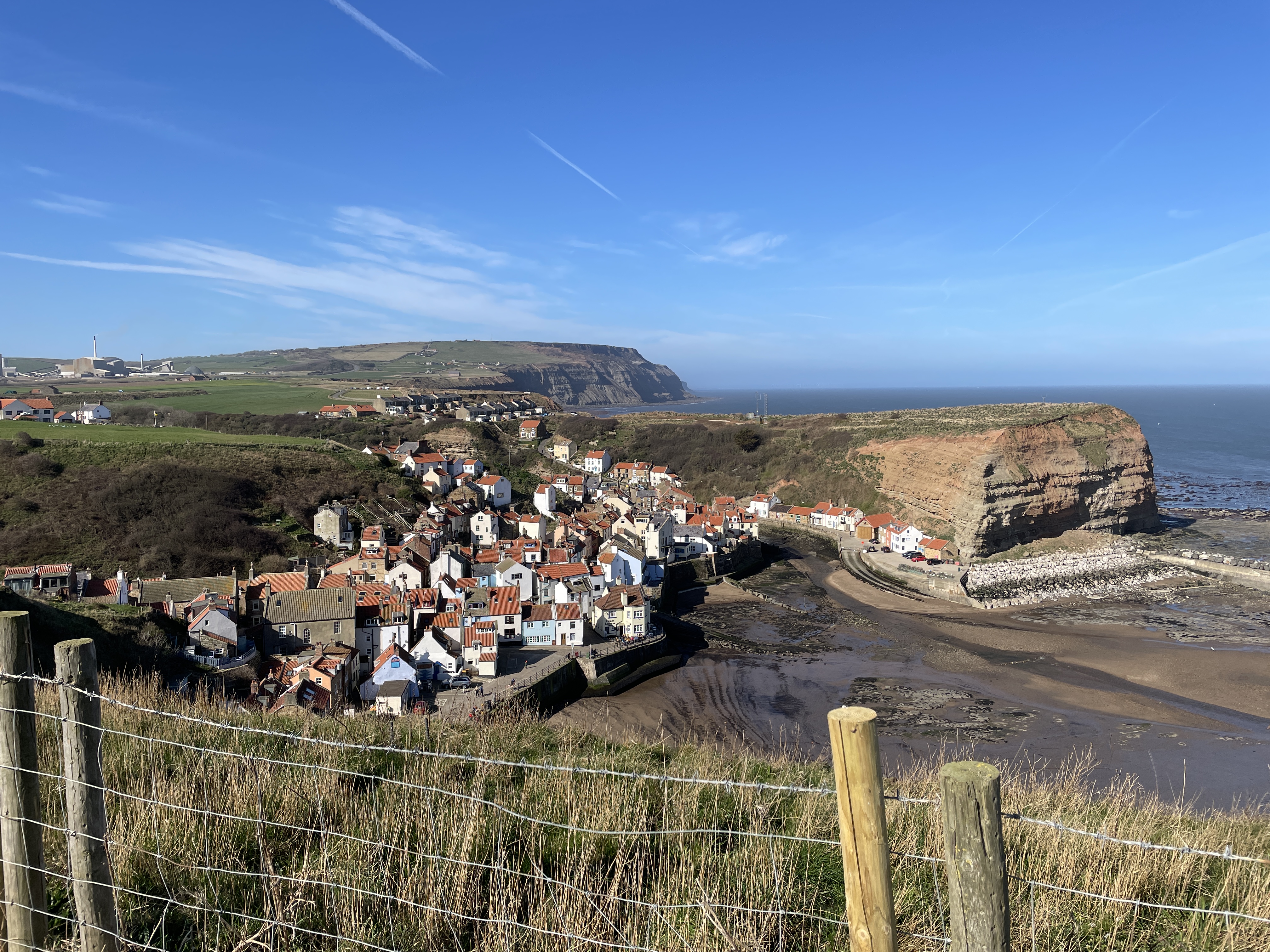
More birds to add to the list this month. Some were in my local Warwickshire patch and others were spotted ‘up north’ when I visited my sister in the North East (as the photos show, I couldn’t have asked for better weather!):

  • Chiffchaff (they finally showed themselves!)
  • Curlew (heard one by Staithes)
  • Gadwall
  • Goldcrest
  • Grey heron (why did it take so long to see one?!)
  • Herring gull (in Staithes and Saltburn)
  • Kittiwake (in Staithes)
  • Lapwing (Staithes)
  • Linnet
  • Meadow pipit (Staithes)
  • Mistle thrush
  • Nuthatch
  • Oystercatcher
  • Rock dove (Staithes)
  • Shelduck
  • Shoveler duck
  • Siskin
  • Stock dove
  • Teal
  • Treecreeper
  • Wheatear

I also spotted the butterflies I mentioned above (Brimstone and Small Tortoiseshell) and a brown hare. I saw a mouse on a local walk too. After some research, I think it was probably a wood mouse.

A few little art gifts

March brought the start of the birthday flurry on my side of the family. I’m trying to challenge myself this year to organise my creativity and prioritise art gifts for family and friends. Long-tailed tits featured in a present for my grandma’s 81st birthday and spring flowers inspired some Mothers’ Day gifts for my mum, grandma and great aunt. Definitely inspired by the warmer days of the month!

Gadwalls and Stock Doves

As I wandered around Brandon Marsh Nature Reserve earlier in the month (more below!) I found myself trying to work out what on earth these ducks in front of me were. Picture a female mallard, but with something just not quite right about the pattern of her feathers. A bit like a robot – they can look very similar to human beings, but you just know something ain’t right. Oh and she had an orange bill (totally different to a female mallard!) The male she was with was grey all over with a black tail. Definitely not a mallard. After some research, I realised they were gadwalls – ducks I’d never seen before!

And they were ‘joined’ on this visit by some stock doves. Now, stock doves look an awful lot like your usual city pigeon, but these ones at the reserve definitely aren’t – they’re woodland birds and they’re very pretty. I particularly love the green patches on their necks.

A trip to Brandon Marsh

And to finish this off, I want to take you back to the start of the month. Early in March, I had a Monday-trip to Brandon Marsh Nature Reserve near Rugby in Warwickshire. I went to this reserve a number of times last year during my wild challenge. It’s a very special place and – having just worked my final Saturday for a while – I thought I’d treat myself.

The journey to the reserve is always a bit painful. Any locals reading this will know that the Fosseway from Stow-on-the-Wold to the Rugby area is far from fun. But I was adamant I was going to make the journey to the gravel pits on my day off. And I’m so glad I did – I had a long list of sights including lots of ducks: tufted ducks, gadwalls, shovelers, teals, shelducks, great crested grebes.

I’ve written about gadwalls and stock doves above, but the muntjac was another highlight. These deer are extremely small and I heard an odd shuffling coming from a tiny bit of scrub as I walked around one of the larger pools. I stopped and looked. Staring back at me was the muntjac. It didn’t seem afraid, surprisingly. It just stood there munching on some greenery, looking at me. I said hello and then left it alone as it disappeared into the undergrowth. I hope it enjoyed the sunshine when it came.

I hope your March was ok – here’s my full wild list

Week 9 (cont.)

Tues 1st March: Admired a beautiful white and brown collared dove in the tree. It was so ‘unusual-looking’.
Weds 2nd March: Read up on greenfinches in my Collins Life Size Birds book. Their scientific name is a tautonym (chloris chloris).
Thurs 3rd March: Holly bushes with a mix of spiky and un-spiky leaves are everywhere at the moment. So interesting!
Fri 4th March: Enjoyed a lovely Spring walk through Honington and saw my first lambs of the year.
Sat 5th March: Visited a scout hut (Rough Close near Coventry) for a work event. Really enjoyed the outdoors with all of the kids.
Sun 6th March:
A very hilly walk in the Cotswolds today (from Stanton). The scenery was amazing.

Week 10

Mon 7th March: Visited Brandon Marsh on my day off. Saw so much!
Tues 8th March: Had a walk on campus in the sunshine. Another reminder of Spring’s approach!
Weds 9th March: Checked-in on the Leamington Peregrines and Rutland Ospreys. The peregrines are bonding and the ospreys will arrive soon.
Thurs 10th March: Identified one of the daffodils in the garden – it’s a jonquil.
Fri 11th March: Re-learnt the difference between a song thrush and a mistle thrush. I think I might’ve got the thrush wrong in my last post!
Sat 12th March: Walked with a friend in Walsall. Saw some brilliant views and enjoyed the nature reserve.
Sun 13th March: Wonderful walk in Sapperton. Saw a wheatear(!) and learnt what a goldcrest’s song is.

Week 11

Mon 14th March: Spotted a brimstone butterfly while on campus.
Tues 15th March: Learnt a lot about naked mole rats in a BBC Wildlife article. They behave like ants!
Weds 16th March: Hyacinths have sprouted in the garden (despite the rain). The ones I saw today were pink.
Thurs 17th March: A brisk morning walk brought more greenfinches. The bottom of the meadow was flooded though.
Fri 18th March: Visited my sister in the North East and headed up Roseberry Topping when I arrived. It was a lovely day and the views were incredible.
Sat 19th March: Spotted stonechats at the top of the cliffs in Staithes.

Sun 20th March: Watched Dynasties II. This episode was about a puma family. The puma cubs are ridiculously cute and the mother was fierce.


Week 12

Mon 21st March: Spent some time mounting fly mothers day watercolours for family. They are small paintings of flowers.
Tues 22nd March: There was a bee-fly on my door when I got home today. I got a great photo of it.
Weds 23rd March: Another early morning walk. This one brought a kestrel, a greenfinch, a chiffchaff, a jay and a buzzard.
Thurs 24th March: Finally got around to some gardening before work. The wisteria desperately needed a trim!
Fri 25th March: I started a new bird painting today. This one is of a swan and is going to be a gift for my great aunt’s 90th birthday in April.
Sat 26th March: Spotted a wood mouse on a lovely local walk! I didn’t get a really good view, but it was definitely a mouse and some basic research suggests it was a wood mouse.
Sun 27th March: Checked out the White Stork webcam on the Knepp Estate. Such impressive birds.

Week 13

Mon 28th March: Read a British Birds article about a whinchat/common redstart cross. I had no idea birds could inter-breed!
Tues 29th March: I spied on some pigeons eating the cherries that have started to grow on our tree. They were nearly falling out of the tree!
Weds 30th March: I did a bit of research into the Isle of Mull’s birds. I’ll hopefully be going in May for a holiday. Apparently, we should be able to see: red-throated divers, white-tailed eagles, peregrine falcons, ringed plovers, whinchats, rock pipits, common redshanks and greenshanks near to where we’re staying.
Thurs 31st March: Read a National Geographic article about a Scottish bottlenose dolphin picking up harbour porpoise sounds. Very interesting!

Can I get a “chiff chaff”

I have an enormous soft spot for chiffchaffs. They may have a rather ‘boring’ buff colour. Not the most ‘interesting’ to look at. But I absolutely love them.

If you’re not sure what a chiffchaff is, I’d urge you to listen to a recording of this bird’s call. You may not recognise the song, but I guarantee that you’ll pick it out if you’re lucky enough to be in their presence when next out and about.

Most chiffchaffs visit us in the UK over the warmer months. They’re a true sign of spring. And they’re pretty numerous – around 1.2 million ‘breeding territories’ according to the RSPB. With our warming climate, some chiffchaffs even stay with us in the south and west for winter. But it’s March when their numbers explode in the UK.

I heard my first chiffchaff of 2022 early in the season. It was on Wednesday 23rd February on a walk near town. I wandered through my local meadow in Shipston-on-Stour and along a lane past the sewage works. This section of the walk, unsurprisingly, isn’t the most pleasant part but birds seem to love it. A small strip of brambles and trees line the side of the works and provide a place of refuge for all sorts of avian friends. It was here that I first heard the chiffchaff sing its song this year.

Chiffchaff on left and willow warbler on right (not to scale!) – Collins Life-Size Birds (2016)

Since then, the chiffchaff influx has well and truly arrived in the local area. I’ve been on a number of walks since and there hasn’t really been a moment where I haven’t heard the chiffchaff’s song. I can’t imagine how many call this part of Warwickshire home, but I feel very lucky that they’ve chosen us after spending their winter months in the balmy climes of southern Europe and northern Africa. I imagine the females will be busy making their small, domed nests soon.

Though easy to hear, this little bird can sometimes be difficult to see. They’re rather small and look like a lot of other warblers. But I got a very good view of one on a recent ramble (featured in the video above!) I decided to extend a local walking route by heading up a bridleway and through some fields. It turned out to be a much longer walk than expected, but the birds and sunshine pushed me through and I made it to the end. The chiffchaffs were belting out their songs from the trees and I was thrilled to get a good glimpse of one through the binoculars. Once your ear picks up the rough direction of the song, it’s much easier to try and locate one. Especially at this time of year when the trees are only just starting to bud.

Chiffchaffs belted out their song on my entire route

The chiffchaff is apparently ‘one of the few British birds to call its name’ (RSPB Pocket Guide to British Birds, 2012). It’s certainly a repetitive song, but I have to disagree with anyone who claims it might therefore be ‘boring’ or ‘annoying’. Though its onomatopoeic quality is unquestionable, if you listen closely it doesn’t always say “chiff chaff”. Sometimes it says “chiff chiff’ and “chaff chaff” or even “chaff chiff”. It also sometimes does a really, really loud “chaff” and then later grants the “chiff” a few extra decibels. So you could say it’s incredibly creative with what it’s got – very limited notes but the song can still surprise you!

A chiffchaff watercolour from early 2021. I feel like I know this bird so much more now and would love to give it another go!

Stormy Feb

I decided on the title of this post before storms Dudley and Eunice hit the UK. And that all feels like it was way before the conflict in Ukraine. Without sounding too blue – and without forgetting how horrifying the conflict must be for those who are actually caught up in it, along with those suffering in the ongoing humanitarian crisis in Afghanistan and countless other conflicts – the world does seem like a pretty bad place right now. And, by the end of February, I imagine everyone must’ve thought the shortest month had felt unnaturally long.

So, before I share, I thought it was important to say that I wondered whether I should post this. When bad things happen, it can feel insensitive to enjoy things. Especially when those bad things aren’t happening to you. But there’s no blissful ignorance behind my acts of wildness for February 2022. Amongst the moments of joy, there was also sadness, pain, fear, denial, worry and care. Along with hope.

An unexpected highlight

There have been a few notable walks this month. I wrote about one when I was caught out in some stormy weather – this chaotic walk was beautiful at times, but also very frightening. A real mixed bag.

Another walk particularly stands out, though. Towards the end of February, I went for a wander around the meadow and up the single track road that leads back to Shipston. It was so bright and peaceful at 6.50am. On the walk, I saw a great spotted woodpecker on a telegraph pole near the farmhouse on the lane. It was drumming the pole furiously – I’ve never seen them do that before. I glanced away from the woodpecker for a moment and was distracted by grey, yellow and a very long tail – a grey wagtail was watching me from the farmhouse roof.

I’m not sure if I’ve mentioned this before, but a patch of scrub near the sewage works on this lane is so popular with the birds. As I wandered past this time, I heard – then saw – lots of thrushes and the bullfinch pair were in the area as usual. The bullfinches seem to love the spot where the road bends around back to town. And, right on this bend, I heard my first chiffchaff of 2022! Definitely my highlight of the month! How unexpected!

Wildlife spots

A few more birds to add to the list this month. Including:

  • Bullfinch
  • Green woodpecker
  • Greenfinch
  • Greylag goose
  • Little grebe
  • Reed bunting
  • Skylark
  • Song thrush

The song thrushes have been a real treat this month – it’s like they’ve suddenly woken from their slumber. Their songs are so random and loud!

My partner and I also saw a beautiful roe stag cross a narrow road one evening on the way to a pub. Luckily, the car ahead was moving at a slow pace so there wasn’t a risk of the deer being struck. He was an absolutely wonderful beast.

There’s a jay!

This watercolour jay was my pride and joy of February. The jay made its way onto my list after I spotted a whole load of them at the end of autumn last year – they practically lined the single track road leading to Burmington from Willington. And, despite the bird book saying they’re commonly heard more than seen, I can 100% confirm that I saw them. They were most likely collecting acorns for their winter larders.

Watercolour Jay

I finished the jay off amidst the fury of Eunice. I remember the dread I felt as I tried to sleep before the approaching storm. I worried for anyone caught up in it. And I had an extremely irrational fear that my roof was going to blow off. This jay saved me from some of those worries.

Spring Flowers

The month started with some shoots in the garden, followed by the snowdrops bursting into life. By the end of February, the daffodils were shining their yellow glow on my walking routes, the green space at work and in my kitchen!

The best flower of the month though? I have to say I have a new-found soft spot for crocuses. Their purples, whites and yellows are just beautiful. They looked very pretty on my windowsill and have brightened up countless patches of grass and scrub this month.

A ladybird called Dot

Dot needed a bit of help

What would you do if you found a ladybird in your bathroom in February? I was faced with this problem. It looked quite sleepy and I wasn’t sure what the best course of action was. If you’ve been reading this blog for a while, you’ll note that a similar thing happened with a bee last year…

It wasn’t the first ladybird I’d found. But it was the first I’d clocked inside – the other one was chilling on a stem in the garden. That seems like a much more sensible place for a ladybird to be.

A ladybird I spied outside on 1st Feb – could it be Dot’s cousin?

Faced with a conundrum, I promptly named the ladybird ‘Dot’ and counted its spots. It only had one on each wing. I then googled what to do. The best advice I could find was to put it outside in a sheltered place. I’d timed my research poorly on that day and had to abandon the ladybird’s rescue and log into a Microsoft Teams meeting. By the time the call had finished, Dot had disappeared.

But it wasn’t long until she made her presence known again. This time, she was wandering around on the stairs – a very dangerous place to be with all of the feet stomping and cats prowling! After some encouragement, she crawled onto my finger and I took her safely to a hanging basket, out of reach of my naughty cats. I hope she managed to find a stem like the other ladybird.

Hopefully Dot liked her new home

I hope your February was ok – here’s my full wild list

Week 5 (cont.)

Tues 1st February: Checked on the ladybird in the garden again. It was still chilling on a stem.
Weds 2nd February: National Hedgehog Day! I enjoyed looking through some pics of hedgehogs on stained glass windows.
Thurs 3rd February: Checked out the White Stork Project. Did you know their enormous nests are useful for other birds and they are important seed banks?
Fri 4th February: Evening walk in Bourton-on-the-Water with a very close friend. It was a beautiful dusk stroll.
Sat 5th February: I had a look at some of the snowdrops on campus after a very busy day on a weekend event.
Sun 6th February: Enjoyed a read about courting in the animal world – lots of songs, dances and gifts!

Week 6

Mon 7th February: Lovely walk up the Hanson Track.
Tues 8th February: Read a National Geographic article about efforts to protect relocated burrowing owls.
Weds 9th February: Stopped to listen to a very loud thrush on a walk through the meadow!
Thurs 10th February: I had a lovely surprise today – a snowdrop had appeared in the garden.
Fri 11th February: A busy day on campus supporting a work event. The ducks on a rectangular pond near one of the buildings brought a smile to my face.
Sat 12th February: Walk through Honington and the meadow. Some of the trees had been cut down, which was very sad to see.
Sun 13th February: I admired some daffodils I bought in the week and my geranium which has decided to flower. Again!

Week 7

Mon 14th February: Some more work on my snail pencil drawing.
Tues 15th February: I found a ladybird in the bathroom and decided to try and rescue it.
Weds 16th February: Enjoyed reading a BBC Wildlife article about courting great crested grebes. I would absolutely love to see their dance in real life!
Thurs 17th February: A very interesting walk. I even wrote a whole post about it.
Fri 18th February: I finished my watercolour of a jay today during the storms. I really enjoyed this one.
Sat 19th February: Spent the afternoon on a walk along the Grand Union Canal in Perivale with some friends. Saw moorhens, coots, a swan flying over (they make funny noises when they fly!) and a pair of little grebes.
Sun 20th February: Counted all of the kites enjoying the wind as I drove home from London.

Week 8 & 9

Mon 21st February: Read an interesting critique of royal estates in BBC Wildlife Magazine. Introducing golden eagles to land in the North of England was a particularly interesting idea!
Tues 22nd February: An interesting read about vagrant species here in the UK. I really like the snowy owl.
Weds 23rd February: A lovely morning walk. I spotted a great spotted woodpecker, grey wagtail and a bullfinch. I also heard skylarks and my first chiffchaff of 2022!
Thurs 24th February: Had a look at Rare Bird Alert UK. The American Robin and Red-Breasted Goose are both pretty cool!
Fri 25th February: Indulged in a jog/walk to the cemetery and back. Lots of dunnocks around!
Sat 26th February: Another busy day on an event and my mum and dad came to visit too! I had a moment of rest admiring the purples and yellows of the crocuses on the windowsill.
Sun 27th February: A lovely stroll through Newbold Comyn and Jephson Gardens in Leamington. My dad reckons he heard a nuthatch.
Mon 28th February: Started my day off with a walk to Tidmington. Heard (and then saw) my first greenfinch of the year!

The calm between the storm…

I had absolutely no intention of going out for a walk this morning. It was stormy overnight and I wholly expected it to be pouring with rain.

To my surprise, when I opened the curtains to see if the cats were sat on the trellis waiting to be fed, I could see crisp, clear light in the distance. So I grabbed my phone and looked at the weather app – sunshine this morning. Hmmm. Unexpected.

Before my partner headed out, he asked me if this was the ‘calm between the storm’. I told him that it must be. He left and I looked at my phone again, staring vaguely at the sunshine and cloud picture for this morning. Flicking to tomorrow, a walk is unlikely to be on the cards. Storm’s comin’ at 3am apparently. So I quickly changed into some clothes and headed outside. I wanted to make the most of the calm.

The trees and hedgerows were still and quiet in Act 1

There were a number of different ‘acts’ to my walk. Act 1 to Honington was idyllic. There were so many birds singing in the trees. Enough to distract me from the cars and lorries storming past me on the awful national speed limit road. There was a thrush of some kind (maybe a song thrush), goldfinches, long-tailed tits and blue tits. The footpath is lined with hedgerows and trees and they weren’t even blowing around much. It felt very calm.

I had to include this one too – I love this alpaca!

The second act took me through Honington itself. I walked past the noisy rookery at the edge of the main road and headed towards the river. The river wasn’t as high as I thought it’d be – this was a relief. I had worried when I set off that the bridge might not be passable. There were more blue tits and some chaffinches on this stretch too.

But I suddenly started to doubt the calm. In the distance on my left, past a village called Tredington, I could see part of a rainbow. But a rainbow needs rain. And it wasn’t going to rain. I dismissed it – my app said it wasn’t going to rain. Isn’t it funny? That blind trust in an app when all the observational information is telling you something different?!

Act 2: The rainbow

As Act 2 progressed, the rainbow grew bigger and bigger. The small part that I initially spotted became a full, beautiful arc. Realisation dawned. This wasn’t going to be the ‘calm’ was it. And, indeed, the third act brought rain and wind. And the wind was the most formidable of the forces – the sound of it speeding through the trees was terrifying. It was a roar. I kept walking, vaguely looking around for shelter ‘just in case’, but I knew I was caught in it now – there was no shortcut home and no shelter. I’d say it only lasted for around 5 minutes but I was shook. I didn’t get soaked. It was the wind that had shaken me.

A lighter wind continued through the rest of the third act. It had settled down but it was still there. As the roaring had mercifully stopped, I took a moment to watch a red kite soaring on the waves in front of the sunrise. Kites always love this kind of weather. I can’t imagine what it must be like to ride this sort of wind. I like to think they enjoy it.

Act 3: A red kite soaring on the wind

Act 4 brought the finale. As I re-entered Shipston from the other side of town, the sun shone and the birds sang once again. I wondered whether the town had even had any of the rain – perhaps my app was right. Maybe Honington was due to get the wind and rain, but not Shipston. Maybe it had been calm here all along. Regardless, I’d certainly experienced the not-so-calm-between-the-storm and, when I arrived back at my front door, another storm was waiting for me. Jolene. 😹

Design a site like this with WordPress.com
Get started